How to measure your space before buying a desk
Measure the space, not just the desk. A desk that fits the wall can still fail if the chair, drawers or door have no room.
What you need
A tape measure, painter's tape and a note of your chair's depth.
Step by step
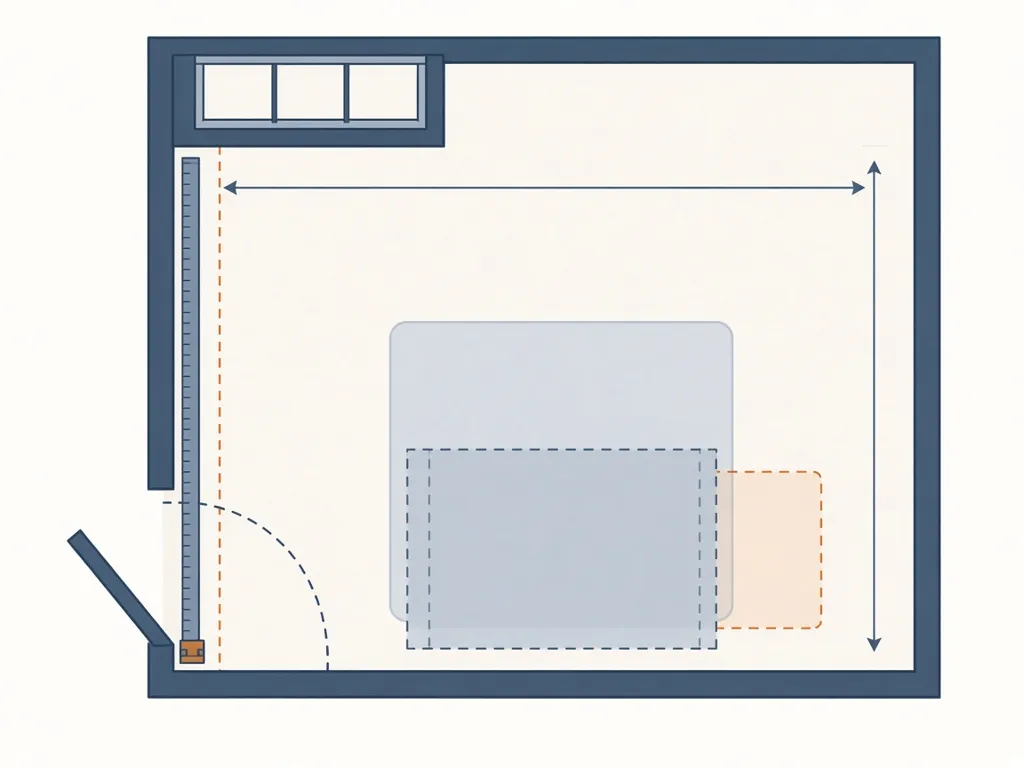
- Wall length. Measure the wall where the desk will go, from corner or obstacle to obstacle.
- Depth available. Measure out from the wall to the nearest obstacle, such as a bed, door swing or walkway.
- Chair zone. Behind the desk, leave room to pull the chair out and stand up. Mark it with tape.
- Drawer and door swing. Mark how far drawers, cabinet doors and the room door open.
- Outlets, windows and vents. Note where they are so the desk does not block them.
- Height. Check window sills and shelves above the desk, especially for standing desks and hutches.
Compare with the listing
Use the listing's stated width, depth and height. Add any return (for L-desks), keyboard tray or pedestal. Then tape the full footprint on the floor and walk around it.
Before you buy, compare the listing's stated dimensions (width, depth and height) and weight capacity with your measurements, and check what is in the box: some listings are complete workstations, others are a single component such as a desktop, panel or pedestal.
How we chose
We have not tested these products. Each pick is matched to this page using its live Amazon listing and the maker's information, checked on the date shown on the card. See our editorial methodology.
Questions
How much room should I leave for the chair?
Enough to pull the chair out and stand up comfortably. Tape it on the floor and try it with your own chair.
What else should I measure?
Drawer and door swing, outlets, windows, vents and anything above the desk.
Where do desk sizes come from?
From each product's live Amazon listing, checked on the date shown.